
Powering AI infrastructure: energy, renewables and data centres in Australia
In our earlier article on Australia as a “must file” jurisdiction for AI related intellectual property, we looked at why the country is becoming increasingly important for AI infrastructure and IP protection. One part of that picture deserves separate attention: energy. As AI systems scale, computer processing alone is no longer the bottleneck. Power availability, reliability and cost play a central role in determining where data centres can be built and how they operate. In practice, this has brought energy and AI infrastructure design much closer together than they were even a few years ago, and has resulted in Australia being a key jurisdiction for IP protection in these areas.
Energy is now part of the core engineering problem for data centres
Modern AI focused data centres are extremely energy intensive. High utilisation rates, heavy workloads and tight “uptime” requirements mean they draw large amounts of power over continuous periods.
In some established markets, these demands have started to collide with grid constraints and sustainability targets, slowing new developments or pushing up operating risk. As a result, energy is no longer something data centre operators can treat as a background utility but is an important design constraint.
This shift is driving practical engineering work in areas such as battery storage, renewables, power electronics, control systems and energy aware workload management.
What is happening on the ground in Australia
Large data centre operators in Australia are directly supporting new energy generation and storage capacity, with the Australian Government paying particular attention to this area.
In March 2026, the Australian Government published Expectations of data centres and AI infrastructure developers, signalling that energy intensive proposals not closely aligned with the expectations may not be prioritised through Commonwealth regulatory assessments. The expectations are broad, but the message for AI infrastructure is clear that power procurement, grid impacts and demand flexibility are factors that can heavily influence how quickly projects progress.
This has been developing for a number of years and many companies already recognise the benefits of building energy related AI infrastructure. Amazon Web Services’ expansion in Australia has been tied to long term power purchase agreements with solar and wind projects across New South Wales, Queensland and Victoria, increasingly backed by battery storage. The objective is to ensure energy resilience and price certainty, in addition to decarbonisation benefits.
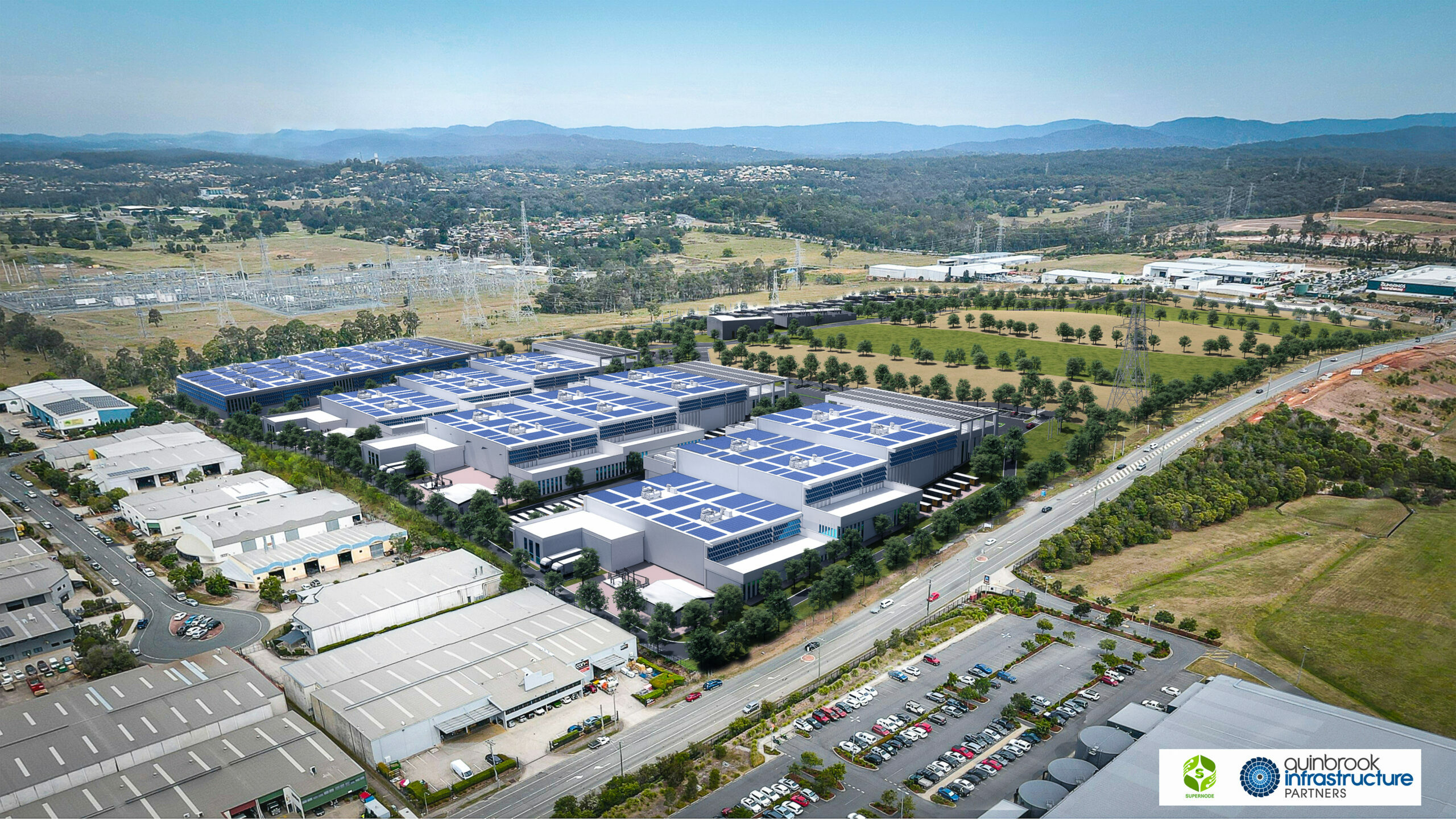
Quinbrook’s Supernode project near Brisbane also continues to grow its hyperscale data centre capacity, with one of the largest co‑located battery energy storage systems in the National Electricity Market (NEM).
Indeed, battery storage capacity across Australia has more than doubled in the last few years. Based on recent analysis by independent research company Rystad Energy, Australia is ranked in the world’s top three countries for utility-scale battery market and the first country to achieve over 1 GWh of utility-scale battery capacity per million people.
Australia’s energy advantage
In addition to government support, Australia’s energy landscape makes energy schemes associated with data centres highly achievable and at significant scale.
Australia already has high renewable energy penetration, expanding renewable energy zones, falling battery costs and a mature electricity market. This provides flexibility that many other countries lack. There is also room to build, with very high land availability outside major cities allowing developers to think more creatively about where data centres sit in relation to energy generation sites.
Of course, Australia is not alone in treating energy as a key factor for AI growth. China, too, has recognised the importance of sustainable energy supply. Recent research and policy developments show data centres being directed towards renewable‑rich regions, with stricter efficiency and renewable‑use standards applied to new projects. Energy availability is being treated as a strategic input to AI development.
Overall, countries that can integrate digital infrastructure with energy systems have significant advantages, and Australia sits firmly in this space.
Why this matters from an IP perspective
As energy integration becomes inseparable from the design of data centres, the nature of innovation is changing.
Control systems, power management techniques, cooling strategies and integrated facility designs are all evolving at a rapid pace in response to AI workloads. Crucially, Australia is becoming a place where those systems are not just used but are operated at large scale and for local and global benefit. From an IP standpoint this matters, with Australia becoming an increasingly significant jurisdiction to hold and enforce patent rights in these technology areas.
